
NFL
FBI Raids Somali “Family” Homes — $1.9B Cash & Guns SEIZED FULL ARTICLE: Before dawn, in a neighborhood where nothing ever seemed to happen, federal agents moved in with chilling precision. What they uncovered behind those quiet suburban doors would expose a hidden system built on loyalty, silence, and deadly profit. A single traffic stop triggered a chain reaction no one saw coming. But the most disturbing part isn’t what was seized—it’s how long it operated unnoticed. Read the full story at the link in the comments below.

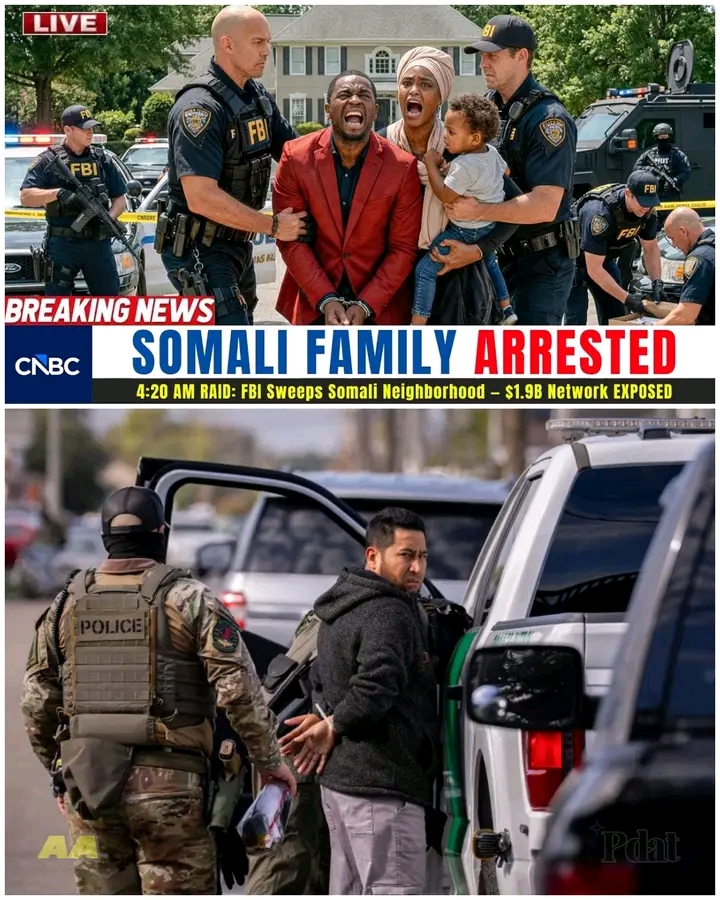
FBI Raids Somali “Family” Homes — $1.9B Cash & Guns SEIZED
At 4:20 in the morning, when Minneapolis still lay wrapped in darkness and frost clung to rooftops, a quiet residential neighborhood became the center of one of the most coordinated federal operations in recent memory. The streets were narrow and still, lined with modest homes whose porch lights glowed faintly against the winter air. Nothing about the setting suggested danger. There were no sirens echoing through the night, no visible signs of unrest. Yet within minutes, that calm would be shattered.
Federal agents had spent months preparing for this moment. Positioned carefully at front doors, back entrances, and along narrow side yards, teams from multiple agencies waited in silence. Unmarked vehicles rolled to precise stopping points. Engines shut off almost simultaneously. Every movement was calculated. This was not a raid aimed at a single suspect. It was a synchronized strike designed to dismantle an entire network before any warning could spread.
When the signal came, doors were breached in rapid succession. The sharp, controlled sounds cut through the stillness. Inside, agents encountered scenes of domestic normalcy—kitchens with last night’s dishes, children’s shoes by the door, family photos hanging neatly on the walls. The contrast was stark. These were not abandoned buildings or suspected drug dens. They were homes that blended seamlessly into the neighborhood.
The suspects were detained quickly and with minimal confrontation. Officers moved methodically from room to room, separating individuals, securing evidence, and preventing communication between houses. The operation’s defining feature was its precision. Each residence was treated as a component of a larger system. The objective was not spectacle but total disruption.
What investigators had uncovered was a family-based drug distribution network that had operated quietly for years. Unlike traditional street-level organizations built on hierarchy and intimidation, this structure relied on kinship and trust. Responsibilities were divided among relatives. One home functioned as a storage site. Another handled transportation logistics. A third acted as a temporary transfer point. Family gatherings doubled as coordination meetings. Vehicles moved through neighborhoods without raising suspicion because they belonged there.
That trust became both the network’s greatest strength and its fatal flaw. By operating within the privacy of family ties, members reduced the need for electronic communication, minimizing digital footprints. Transactions were conducted in person. Schedules were varied deliberately. Small quantities were transported at a time to avoid drawing attention. On the surface, everything appeared ordinary.

FBI Raids Somali “Family” Homes — $1.9B Cash & Guns SEIZED FULL ARTICLE: Before dawn, in a neighborhood where nothing ever seemed to happen, federal agents moved in with chilling precision. What they uncovered behind those quiet suburban doors would expose a hidden system built on loyalty, silence, and deadly profit. A single traffic stop triggered a chain reaction no one saw coming. But the most disturbing part isn’t what was seized—it’s how long it operated unnoticed. Read the full story at the link in the comments below.
Kacper Tomasiak już ma zagwarantowaną emeryturę. Tyle wypłaci mu państwo! Kwota robi ogromne wrażenie
Posypały się komentarze! 😊😊 ➡
Decyzja Igi Świątek doprowadzi kobiecy tenis do wielkich zmian 😳 ➡
Służby przekazały porażające ustalenia 😱
Czegoś takiego nikt się nie spodziewał 😱
Bursztynowicz i Kassin oficjalnie razem. Gratulacje płyną z całej Polski
Tusk nie wytrzymał i nagle wypalił do Nawrockiego i polityków PiS. Kompletnie się nie hamował
Aleksandra Kwaśniewska została zapytana o dziecko. Ludzie nie mogli uwierzyć co odpowiedziała
Stoch powiedział to wprost!
Psychiatra nie mogła dłużej milczeć. Chodzi o wywiad Nawrockiej. Niebywałe co zauważyła
