
NFL
It’s the cancellation that has the literary world reeling. Publishing giant Simon & Schuster has dropped Stephen King over a single piece of misinformation about conservative commentator Charlie Kirk. King deleted the post and called it a mistake, but the damage was done. As he now pleads with fans to support his new movie, a fierce debate is raging: Is this a necessary act of public accountability, or has cancel culture finally gone too far? Get the full, shocking story in the comments.

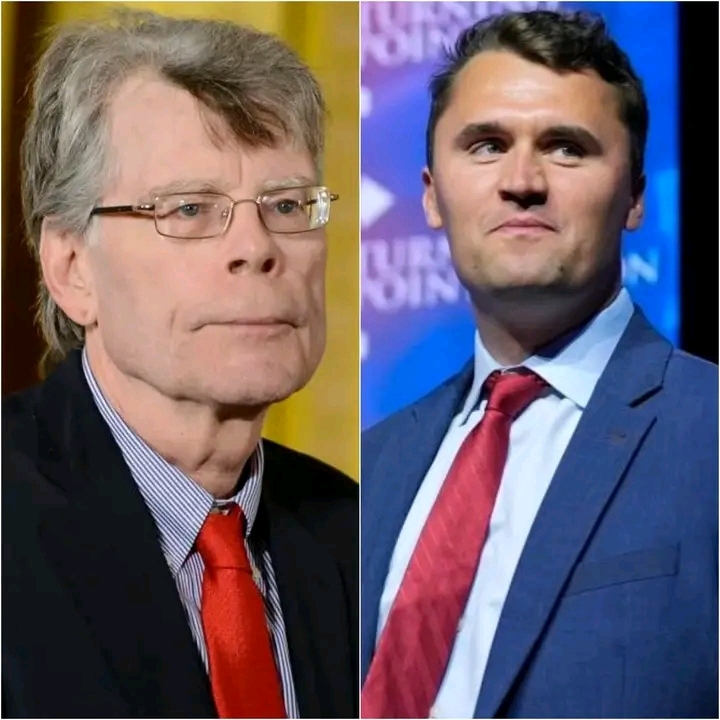
HEARTBREAKING: Stephen King’s Legacy on the Brink After Publisher Cancels Books Over One ‘Honest Mistake’
For nearly fifty years, Stephen King has been the architect of our collective nightmares, a storyteller who taught the world to fear clowns in storm drains and the hidden darkness of the human heart. But today, the 78-year-old author finds himself the protagonist in a uniquely modern horror story—one where the monster isn’t a supernatural entity, but a single, deleted social media post, and the terror is watching a lifetime of work threatened with erasure.
The ordeal began with thirteen words on X (formerly Twitter). In a heated political exchange, King, a famously outspoken liberal, posted that commentator Charlie Kirk had “called for gays to be stoned.” The claim was explosive, and it was false. While Kirk’s rhetoric on LGBTQ+ issues has been widely condemned as hostile and inflammatory, he had never made that specific statement. The digital backlash was instantaneous. Within hours, King realized his error, deleting the post and issuing a swift apology. “I made an honest mistake,” he wrote. “I never meant to spread misinformation or cause harm.” But in the court of public opinion in 2025, the retraction came too late. The trap door had already opened.
The most stunning blow came not from online trolls, but from the institution that had been his home for decades. Simon & Schuster, his longtime publisher, announced it was indefinitely suspending the release of his next two novels. The move, a corporate earthquake in the literary world, was justified as a necessary response to a breach of public trust. An author of King’s stature, the publisher implied, has a higher responsibility to verify his claims. For the man who has sold over 400 million books, it was a brutal and unprecedented rebuke. His literary legacy, once seemingly etched in stone, was suddenly in jeopardy.
“I don’t understand why people are trying to ruin my life and legacy over a mistake,” King confessed in a raw, emotional interview with The Atlantic this week, his bewilderment palpable. “I’ve spent my whole career trying to tell stories that matter… I hope people can see this for what it was—a mistake, not malice.”
King’s predicament has become a flashpoint for one of the most contentious issues of our time: cancel culture. His case is a complex and uncomfortable test of our societal values. On one hand, the incident highlights the real-world damage of misinformation. In a deeply polarized nation, a false claim from a figure with millions of followers can incite hatred and further entrench division. This is the argument for rigorous public accountability, a belief that influence carries an immense burden of responsibility.

Porażające wyznanie

Realizator nie zdążył zareagować…

Ale akcja :D

Tadeusz Rydzyk może mieć problem. Chodzi o Muzeum

Zadzwonił do Nawrockiego, gdy był w Kanale Zero, Prezydent pod ścianą

Cała redakcja Świata Gwiazd przesyła gratulacje!

Nawrocki w konflikcie z Kaczyńskim? W tle kryptowaluty

Okazało się👇

Kasia Tusk wystroiła dom na święta. Pokazała zdjęcia

Nawrocki gratuluje Rydzykowi. “Radio Maryja głosicielem prawdy, jedności i wierności”

🔴 Tusk wraca na szczyt, a sondaże znów grają pod jego dyktando. ⬇️⬇️⬇️ Link do artykułu w komentarzu
